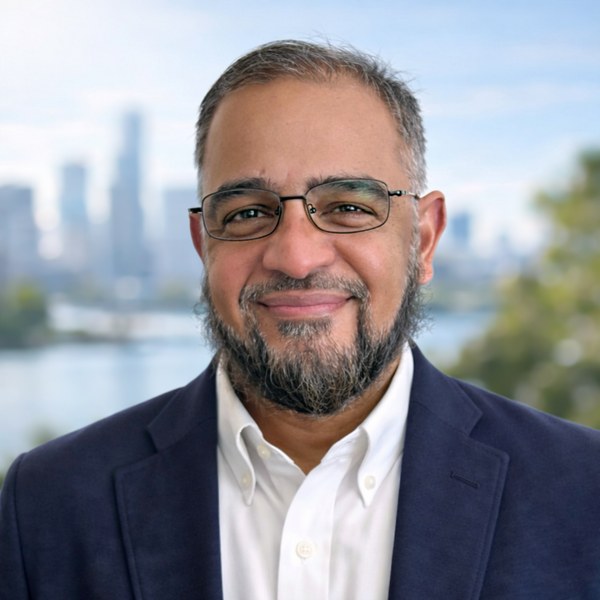
Sharaf
Shabbir Sharaf has spent 21 years building and operating apparel brands — seven of them simultaneously at peak, across Amazon, wholesale, and direct-to-consumer. He founded Noble Mount in 2005 and built it into a multi-brand apparel operation with a full in-house design studio, a 20,000 square foot warehouse, direct factory relationships across India, China, Italy, Thailand, and the United States, and over $15 million of personal capital deployed.
That operating record is the foundation of every LWA engagement. The problems apparel founders bring — margin compression, channel dependency, supply chain structure, SKU proliferation, exit positioning — are problems Shabbir has navigated at scale, with his own money, across multiple economic cycles.
Shabbir built the Noble Mount supply chain from the ground up. It began with wholesale sourcing from Los Angeles importers and the New York garment district, progressed to direct factory relationships in China maintained through quarterly visits since 2012, and reached full vertical integration — custom yarn specifications, custom fabric composition, dyeing and finishing to brand specification. Every cost layer was negotiated and controlled directly.
Apparel margin problems are most often supply chain problems in disguise — visible only when you have operated every layer of the stack. The supply chain side — factory terms, fabric composition, colorway count, minimum order commitments — is where the real leverage lives. LWA diagnoses from both sides simultaneously.
At a certain point, high online customer acquisition costs at Noble Mount broke the margin math. The cost to acquire and maintain a customer at the existing price tier had compounded to the point where a fundamental rethink of positioning was necessary. The response was not incremental. Moving up-market required restructuring the supply chain to support a higher price point, rationalizing the SKU catalog, renegotiating factory relationships, and rebuilding the product positioning from the ground up.
The business survived that transition and rebuilt on stronger margin economics. Most of the brands LWA works with today are navigating some version of the same problem.
Shabbir joined Amazon in 2003, the week the company launched its third-party seller business. He rose to Senior Category Manager with full P&L responsibility, attended monthly business reviews with Jeff Bezos, and served as the seller advocate when FBA was being designed — contributing to the program before it launched. He held the Bar Raiser credential, held by fewer than two percent of Amazon employees.
For PE firms conducting diligence on apparel acquisitions, that perspective is directly relevant. The questions that determine deal value — is this brand’s Amazon revenue sustainable or PPC-dependent, what does true margin look like stripped of promotional reliance, what is the real channel concentration risk — are questions LWA answers from inside knowledge of how the platform was built, combined with 21 years of operating within it.
Lake Washington Advisors serves two client types.
Apparel brand founders at $5M and above who are hitting a margin wall, carrying channel risk, or preparing for exit. The engagement is diagnostic first — the 5Angle framework evaluates demand, product, unit economics, channel mix, and operator capability simultaneously. From there the work is specific: which SKUs to rationalize, where the supply chain cost is leaking, how to build the channel mix that supports a defensible exit multiple.
PE firms conducting pre-acquisition diligence on apparel brands, or requiring an operating partner for apparel portfolio companies. Apparel acquisitions carry category-specific risks that generalist diligence misses — channel sustainability, true margin stripped of promotional reliance, supply chain tariff exposure, wholesale scalability. LWA answers those questions from 21 years of operating experience inside the category.
- MBA — Haas School of Business, UC Berkeley
- B.E. Computer Engineering
- Founder, Noble Mount — 21 years
- 7 apparel brands — $15M own capital deployed
- Full supply chain vertical — fiber to consumer
- Direct factory relationships across India, China, Italy, Thailand, USA
- 8 Amazon marketplaces — North America & Europe
- Wholesale — department store & tradeshow (MAGIC, Curve)
- Still operating daily
- Joined at inception of the third-party seller business
- Led seller onboarding team — marketplace launch
- Senior Category Manager — full P&L responsibility
- Seller Advocate — FBA Product Design Team
- Monthly Business Reviews with Jeff Bezos
- Bar Raiser — Top 2% of Amazon
- Managing Director, Lake Washington Advisors
- Operating Partner — Apparel Brands
- The 5Angle Diagnostic — Fix, Diversify, or Exit
- Supply Chain & Sourcing
- Exit Positioning
- PE Acquisition Diligence
- Curated operators from Amazon, Microsoft, Boeing & Starbucks
- Every engagement principal-led by Shabbir
- Specialist depth in supply chain, financial modelling & technology
- Seattle — the deepest institutional talent concentration in American business